

Hampi
Peep Through Hampi into the Glorious Era of South India
Hampi, located in the Vijayanagara district of Karnataka, stands as a living testament to the golden history of South India. This Hampi backpacking guide will help to learning about glorious history as well as places to visit in Hampi UNESCO World Heritage Site.
The Vijayanagara Empire was founded here in 1336 AD, marking the beginning of the city's golden era. Prior to this, evidence suggests that Buddhism had a significant influence in this region around the 3rd century BCE.
Hampi is mentioned in Hindu epics like the Ramayana and Puranas, where it is referred to as the sacred Pampa Devi pilgrimage site. The founders of the Vijayanagara Empire, Harihara I and Bukka Raya I, transformed Hampi amidst the Tungabhadra River valley.
The rulers strategically chose Hampi for its secure location. Under the…
However, this splendid city faced a catastrophe in 1565. The combined armies of the Deccan Sultanates attacked Vijayanagara. A fierce battle at Talikota resulted in the defeat of the Vijayanagara Empire. Subsequently, Hampi was gradually looted over several months, leaving the city abandoned with only ruins remaining.
The city was forgotten for centuries. After gaining independence from the British, the Archaeological Survey of India took notice of the site, and extensive excavation and restoration work was carried out. Recognizing its historical and cultural significance, Hampi was declared a UNESCO World Heritage Site in 1986.
The ruins of Hampi provide a glimpse into its historical grandeur. The single-stone carved sculptures here are astonishing examples of formidable artistry. These ruins, found along the Tungabhadra River, are not only a legacy but also showcase…
The Most Convenient Way to Reach Hampi, Karnataka:
By Air: While Hampi doesn't have its own airport, the nearest domestic airport is located in Hubli (HBX), approximately 160 kilometres away. Several domestic airlines operate regular flights to Hubli from major cities like Bangalore, Mumbai, and Hyderabad. Upon arrival in Hubli, you can take a taxi, bus, or hire a car to reach Hampi.
By Train: For a more budget-friendly option, reaching Hampi by train is a viable choice. The nearest railway station is Hospet Junction (HPT), situated around 13 kilometres from Hampi. From Hospet Junction, you can easily find taxis, auto-rickshaws, or local buses to cover the remaining distance to Hampi.
By Road: Hampi is well-connected by road to major cities and towns in Karnataka and neighbouring states. Karnataka State Road Transport Corporation (KSRTC) operates regular buses to Hampi from Bangalore, Hyderabad, Pune, and other major centres. Private bus operators also offer services to Hampi, providing flexibility in scheduling and pricing.
Travel within the city: You can hire an auto-rickshaw to wander within the city. Renting a bicycle or a motorbike is another option, which is quite convenient.
Best Time to Visit Hampi: Travel experts suggest to visit the historical city Hampi when winter hits in the North, thus, October to February is the best time.
Quick facts
Must Know Things If You're Planning a trip to Hampi Karnataka:

Type

Age

Best time

Distance from Hubli
Distance from Bangalore

Nearest Airport

Nearest Railway Station

PTVI Rating

Days Required

Estimated Budget for Couple
Main Attractions

Places to Visit in Hampi, Karnataka:
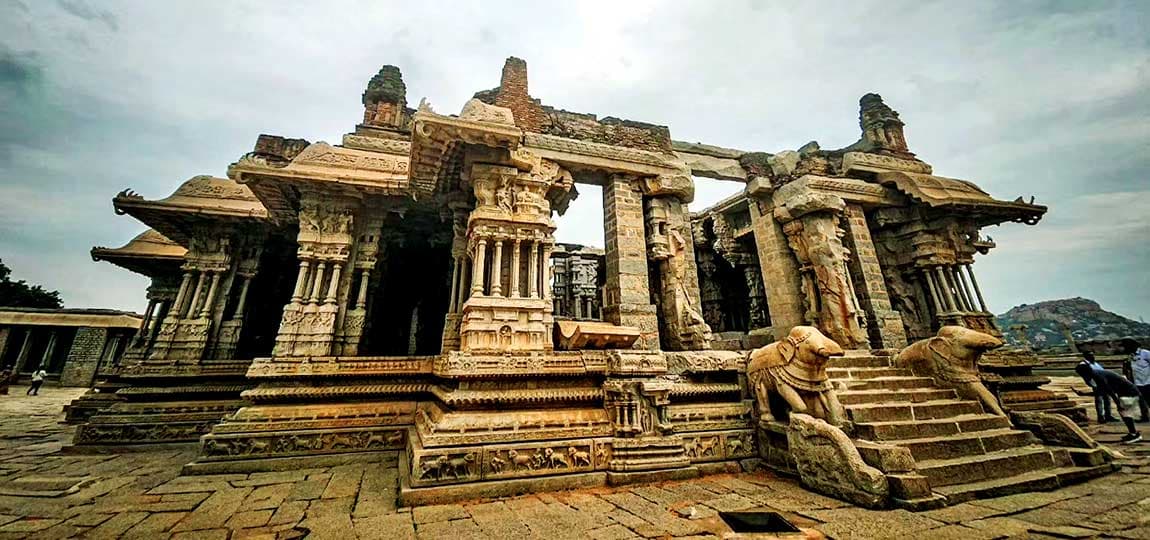
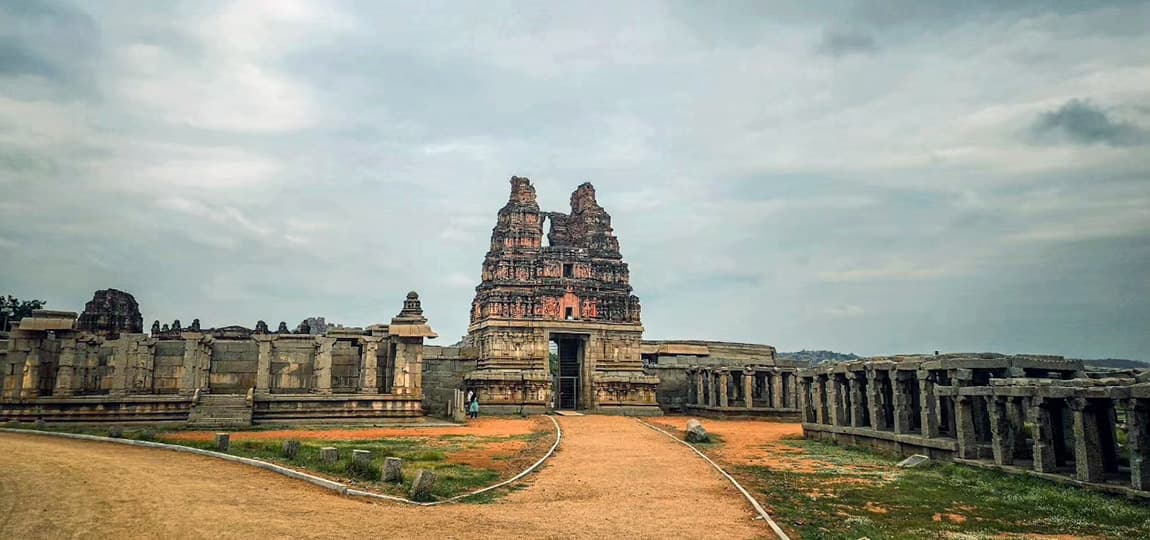
Vithala Temple: Constructed around the 15th century, the Vithala Temple complex is an exemplary piece of Dravidian architecture. Dedicated to Lord Vishnu, the Vithala Temple and its precincts, despite centuries of neglect, stand as a symbol of Hampi's glorious past. As you step into the complex, you will be greeted by a symphony of stone carvings that showcase the exceptional artistry of Vijayanagara sculptors.
The Vithala Rath (Stone Chariot) is a stunning structure dedicated to Garuda, the divine bird and vehicle of Lord Vishnu. Another fascinating feature of the Vithala Temple complex is the presence of musical pillars. These seemingly ordinary pillars, when gently tapped in a specific order, produce melodious sounds similar to various musical instruments.
Elephant Stables: The Elephant Stables in Hampi provide a captivating glimpse into the power and grandeur of the Vijayanagara Empire. Built in the 15th century, these stables were a crucial part of the royal infrastructure. Imagine rows of towering buildings that once housed mighty elephants, symbolising royal companions, transportation, and even military strength.
Despite the destruction and neglect, the Elephant Stables remain a significant site, sparking many royal imaginations in the minds of visitors.
Royal Enclosure: Spanning over 59,000 square metres, the Royal Enclosure was a fortified area marked by double fortification walls. Envision a fortified area filled with palaces, audience halls, administrative buildings, water management systems, and other structures dedicated to the functioning of the royal family and the empire.
While time and neglect have taken their toll, the Royal Enclosure still offers a glimpse into the grandeur and strategic planning of the Vijayanagara dynasty.
Queens Bath: Located near the entrance of the Royal Enclosure, the Queens Bath is a rectangular building made of bricks and granite. The exact purpose of the Queens Bath remains a subject of debate among historians. It is possible that the Queens Bath served multiple purposes, including bathing, leisure activities, and even small gatherings. Regardless of its purpose, it is a magnificent structure that reflects the luxurious lifestyle of the royal family.
Lotus Mahal: This enchanting two-storied structure, also known as Kamal Mahal or Chitrangi Mahal, is famous for its lotus-shaped design and the captivating blend of Islamic and Hindu architectural styles. The Lotus Mahal stands as a unique gem among Hindu and Dravidian architecture.
Beyond its aesthetic appeal, the Lotus Mahal is also appreciated for its ingenious engineering, including a symmetrical design and natural air conditioning. Located near the Elephant Stables, the Lotus Mahal is easily accessible while exploring other Hampi ruins within the Royal Enclosure.
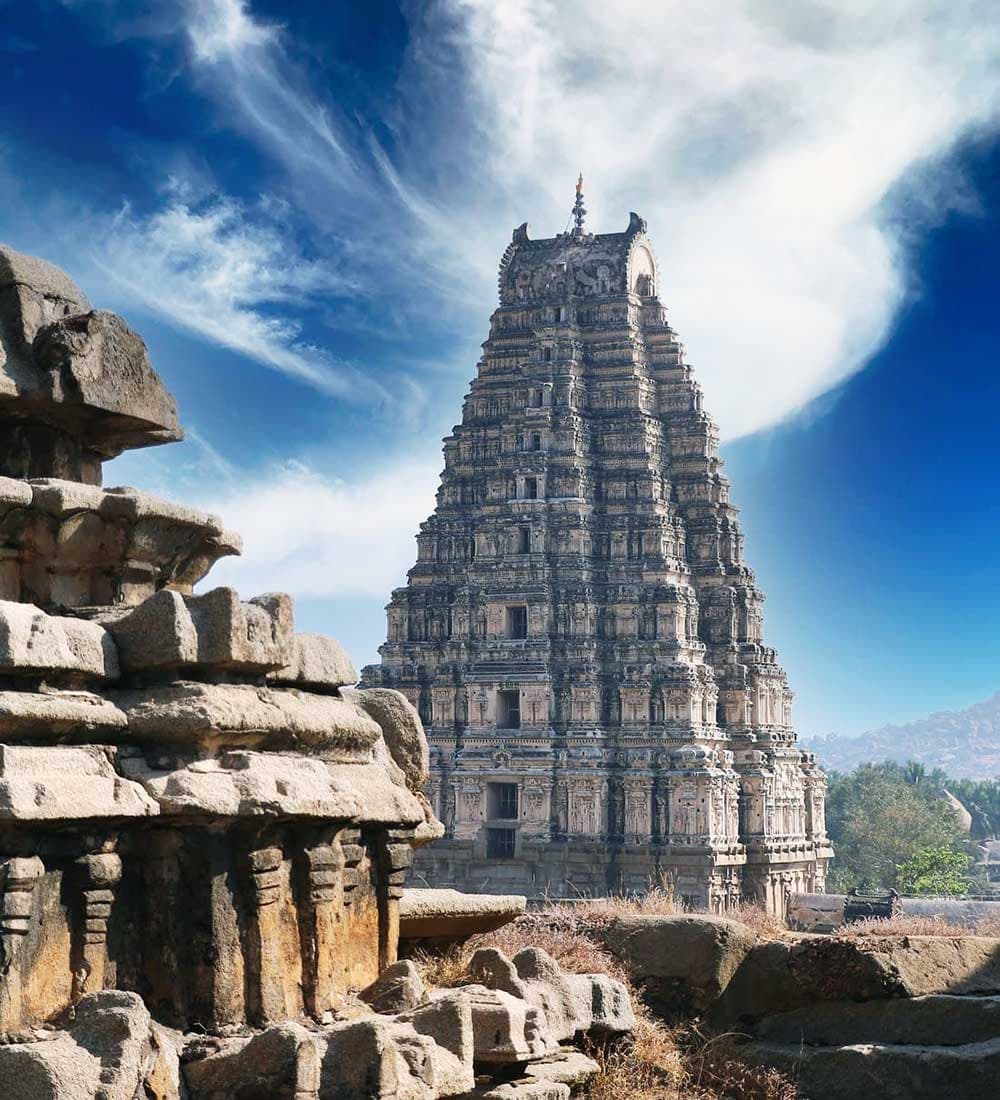
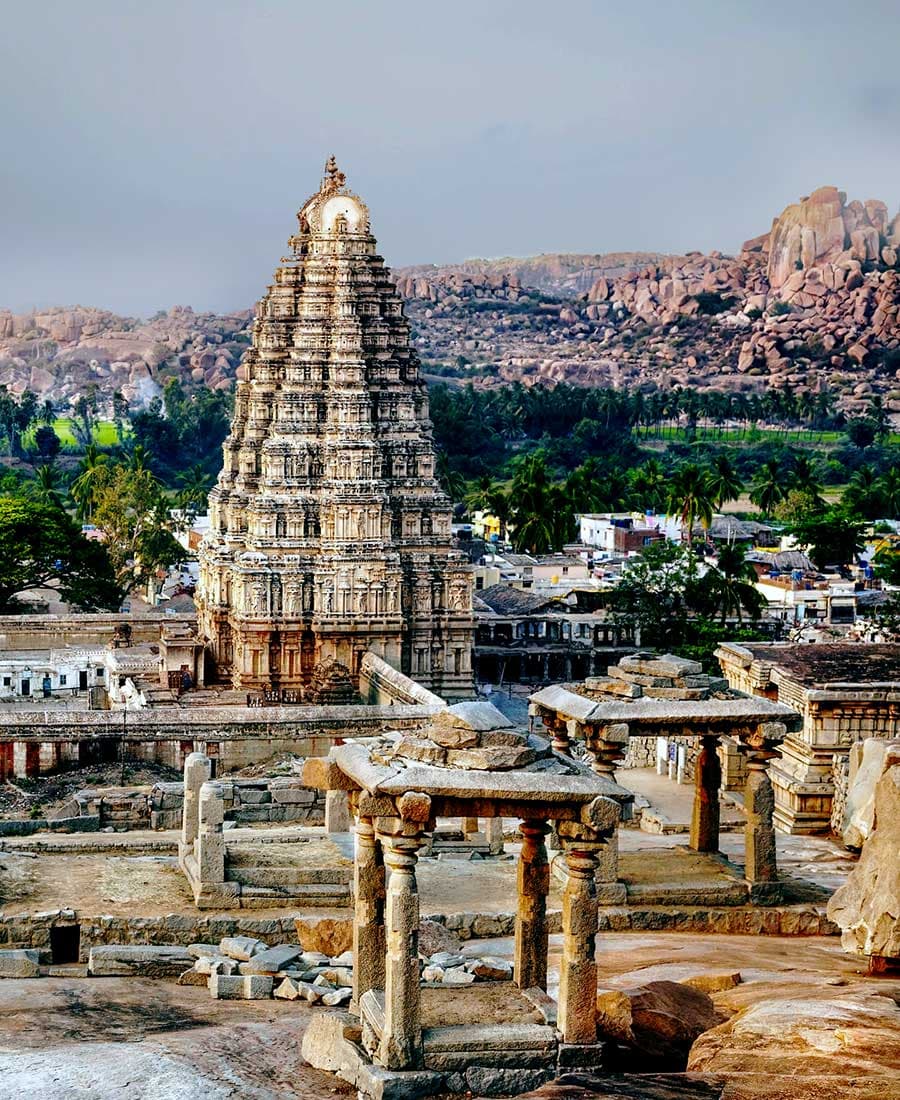
Virupaksha Temple Hampi: Constructed in the 7th century AD and later expanded by the Vijayanagara rulers, the Virupaksha Temple is dedicated to Lord Shiva. The Virupaksha Temple, one of the most enchating Hampi historical temples is the crown jewel of Hampi. This temple is an intriguing monument that stands as a symbol of the city's religious significance and architectural prowess.
Unlike many other structures in Hampi, the Virupaksha Temple remains an active place of worship, attracting crowds of devotees and history enthusiasts alike. Within the complex, the sacred pond known as Pushkarini is believed to have healing properties and is a popular spot for devotees to perform rituals.
Hampi Bazaar: Also known as the Virupaksha Bazaar, Hampi Bazaar is more than just a market; it is a historic site and a vibrant centre soaked in the spirit of Hampi. Its grandeur was at its peak during the Vijayanagara period, but the bazaar still retains its charm and offers a unique shopping experience among the ruins.
Hampi Bazaar serves as a convenient starting point for exploring other historical sites in Hampi. Several guesthouses and budget accommodations are located near the market, making it a central hub for your Hampi adventure.
Kadalekalu Temple: This temple is a popular site in Hampi, known for its massive statue of Lord Ganesha. In Kannada, "Kadalekalu" means "Bengal gram," which reflects the similarity of the Ganesha statue's belly to this pulse. Carved from a single boulder, the statue stands an impressive 4.5 metres (15 feet) tall. This awe-inspiring sculptural feat showcases the artistic brilliance of the artisans of the Vijayanagara era.
Sasivekalu Temple: Nestled among the vast ruins of Hampi is the Sasivekalu Ganesha Temple, a charming and relatively smaller monument compared to the grand structures of the Vijayanagara era. The most notable feature of the Sasivekalu Ganesha Temple is the massive monolithic statue of Lord Ganesha, carved from a single block of black basalt rock.
The statue depicts Ganesha seated on a high platform, holding various symbolic objects like a lotus flower and a conch shell in his four arms. The intricate details of the statue, showcasing Ganesha's ornaments and attire, are a testament to the skill of Vijayanagara sculptors.
Laxmi Narsimha Temple: This temple is a sight to behold, dedicated to Lord Narasimha, the fourth avatar of Lord Vishnu. The most prominent feature of the Lakshmi Narasimha Temple is the gigantic statue of Lord Narasimha, carved from a single block of red-brown sandstone, standing at an impressive height of 6.7 metres.
The statue depicts Narasimha in his fierce form, emerging from a split pillar and slaying the demon king Hiranyakashipu. The intricate details of the statue, showcasing Narasimha's jewellery, muscles, and the demon king under his feet, are a remarkable display of Vijayanagara sculptural skill.
Things to do in Hampi:
Dive Deep into the Glorious History of the Vijayanagara Dynasty
Several princely states in South India have been exceptionally affluent and powerful. Hampi stands as a testament to the extraordinary opulence of the Vijayanagara Empire. The ruins that remain today not only offer a glimpse into the past but also allow you to imagine the golden era of this empire. The stone-carved sculptures, musical pillars, complexes, and stone chariots all give you an idea of how the Vijayanagara rule must have been a heaven-like realm.
Soak in the Serene Beauty of Tungabhadra River Valley
The city of Hampi was established in the Tungabhadra River valley, where only ruins remain. Although the grand civilization of Hampi has been destroyed, the beauty of the Tungabhadra River valley remains untouched. This is a region of the Deccan Plateau where rocks are abundant. The area becomes unbearably hot in summer, but during the winter season, the valley showcases its delightful charm, which is incredibly captivating.
Enjoy a Coracle Ride on Hippie Island
To enjoy the gentle flow of the Tungabhadra River in Hampi, round boats made of bamboo and plastic are used. Hippie Island is a place where nomadic foreigners and Indians set up camp. If you are interested in meeting people from different cultures, expanding your knowledge, and making new friends, this place certainly provides a unique atmosphere.
Taste the Authentic Food of the Region
In Hampi, you can experience the culinary style of the Kannada region of South India. Most communities here primarily consume vegetarian food. Dosa, idli, vada, upma, medu vada, and other rice-based dishes are typically eaten with chutney and rasam (a soup-like dish made from lentils). You should also definitely try mallige and payasam, which are local dishes of Hampi.
Photo gallery
Photo Gallery of trip to Hampi, Karnataka:
Tips to consider when planning a trip to Hampi, Karnataka:
- It is strongly recommended to hire a guide in Hampi; it will help you gain deep knowledge about the places and ruins.
- If you want to plan a trip to Hampi, consider booking travel in advance to ensure a hassle-free journey.
- Avoid visiting Hampi in the summer, as scorching heat can ruin your entire trip.
- You can find budget-friendly homestays in the villages near the Tungabhadra river valley.
- Cover up your entire body with light cottony clothes and keep yourself hydrated.
- Start your day as early as possible to cover the places with soothing weather in the morning..
- Try local food at restaurants like Green Garden Family Restaurant and Laughing Buddha Cafe on Hippie Island.
- Take breaks, soak in the scenery, and avoid littering.
Explore more
Explore more Heritage and Historical Places in India:
Trending
Top Trending Destinations in India
FAQ
Frequently asked questions
Need assistance?
Let our travel experts plan it for you.
Whether you're heading to the high Himalayas or scenic coastal escapes, our team builds seamlessly crafted journeys tailored around you.
We take care of the entire hassle—handpicked hotel stays, dependable taxi services, detailed daily itineraries, complete tour packages, and local insider secrets.
Drop your details below, and a travel specialist will get in touch with you shortly.
Office
3/33, Prabhati Marg, Chitrakoot, Jaipur 302021, India
Quick inquiry