


Ranthambore National Park
Ranthambore National Park: A Jewel of Indian Wildlife
Ranthambore National Park is one of India’s most prominent and tourist-attracting wildlife sanctuaries. Located near Sawai Madhopur in Rajasthan, this national park is nestled between the Vindhya and Aravalli mountain ranges and is surrounded by the Chambal and Banas rivers.
Once the royal hunting ground of Jaipur’s royal family, Ranthambore saw a ban on hunting after India gained independence. In 1973, it was declared a Tiger Reserve, and in 1982, it became a National Park.
Today, Ranthambore spans approximately 1,334 sq. km of forested area, with only 20% of it open for safaris. The park is uniquely open to the public for one day each year during Ganesh Chaturthi, when devotees visit to offer prayers to Lord Ganesh at the world’s only Trinetra Ganesh Temple located inside the park.
As of 2025,…


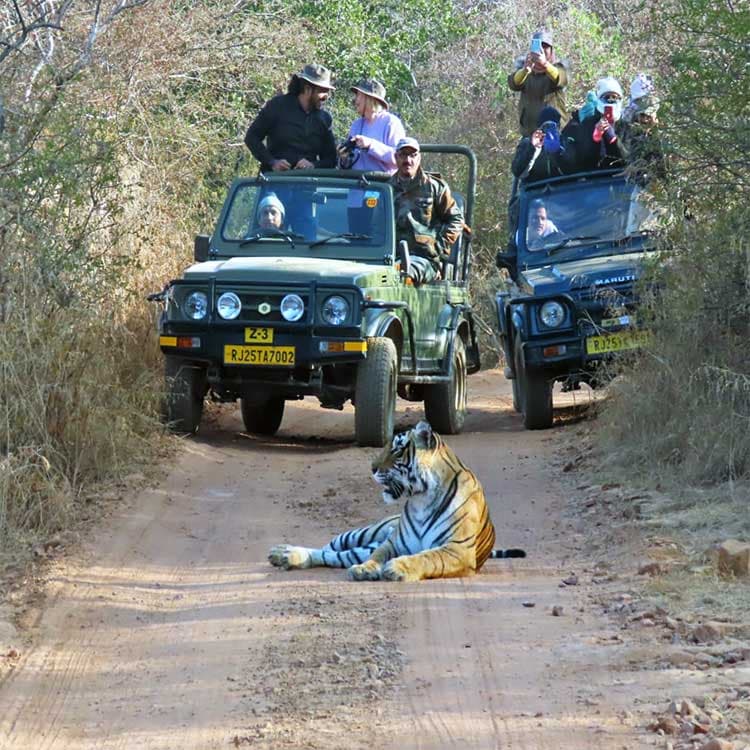
For jungle safaris, two types of vehicles are available: Gypsies (smaller, private vehicles) and Canters (larger, shared vehicles). Gypsies are typically more expensive than Canters, and their bookings tend to fill up quickly.
Although Ranthambore is renowned for its tiger sightings, the park also hosts 80 species of mammals and reptiles. Apart from tigers, visitors can spot leopards, sloth bears, langurs, chinkaras, spotted deer, crocodiles, and more.
Ranthambore is also a paradise for bird lovers, with over 300 bird species inhabiting the park. Among the trees, Dhok is the most commonly found species, along with mango, tamarind, jamun, and banyan trees in abundance.
In summary, Ranthambore National Park is a stunning, safari-friendly destination in Rajasthan that offers an unforgettable wildlife experience. Exploring the park, witnessing wildlife up close,…
The Most Convenient Way to Reach Ranthambore and Plan Safari:
Ranthambore is conveniently accessible via Sawai Madhopur, which lies on the well-connected Delhi-Mumbai rail corridor. The newly constructed Delhi-Mumbai Expressway also passes through the area, enhancing connectivity.
By Air: Jaipur International Airport is the nearest to Ranthambore National Park, 170 kilometres, a 3 to 3.5 hour journey. You can either book a private taxi from the airport or take a bus from Durgapura bus stop.
By Train: Sawai-Madhopur is a prominent station in the Delhi-Mumbai railway line. You can book a train ticket to Sawai Madhopur and then reach Shilpgram Ticket Counter for safari bookings, only 6 km from the main railway station.
By Own Vehicle: Visitors can drive their vehicle to Ranthambore via Sawai Madhopur, well-connected by the Delhi-Mumbai motorway.
By Road Transport: Choose either Jaipur or Kota as a destination and then take a bus to reach Sawai Madhopur. Shared taxis are readily available outside the railway station and bus stop to the ticket counter.
How to Book a Safari in Ranthambore National Park
1. Online Booking
- Visit the official Rajasthan Forest Department website.
- Choose the Online Safari Booking option.
- Fill in the required details, select your preferred zone, vehicle type (Gypsy or Canter), and make the payment.
- Carry a printed copy or a digital confirmation to present at the counter on the day of your safari.
2. Offline Booking
- Visit the Shilpgram Ticket Counter in Ranthambore.
- Fill out the required form and choose between a Gypsy or a Canter vehicle for your safari.
Note: Gypsies are usually fully booked online, so availability at the offline counter is limited.
Book with Places to Visit India:
At Places to Visit India, we offer affordable jungle safari packages tailored to your preferences. Let us handle the details while you enjoy a seamless and unforgettable wildlife adventure in Ranthambore.
Quick facts
Must Know Things When Planning Ranthambore Jungle Safari:

Category

Famous For

Province

Best Time

Delhi to Sawai Madhopur
Jaipur to Sawai Madhopur

Est. Budget for Couple

PTVi Rating

Highlights

Places to Cover during Ranthambore National Park trip:
Zones 1-5 (Core Zones): Zones 1 to 5 of Ranthambore National Park are the most popular among visitors and are highly recommended by safari experts. These zones are accessible through the Sherpur Gate and are often referred to as the core zones. Compared to the buffer zones, the core zones offer a higher chance of spotting diverse wildlife.
Zone 3: Zone 3 is considered the most scenic part of the core zones. It features stunning views of the Padam Talao and Rajbagh Talao. During the summer months, wildlife, especially tigers, can frequently be spotted here as they come to these water bodies to quench their thirst.
Zones 6-10 (Buffer Zones): Zone 6 runs parallel to Zone 1, which means tigers from Zone 1 are often sighted here. The entry point for Zones 6 to 10 is located near Sawai Madhopur town. Furthermore, Zones 7-8 are home to a variety of other wildlife species in addition to tigers. Zone 9 is located farther from Sawai Madhopur and is the least visited zone due to its distance. Zone 10: Despite being a buffer zone, it is considered one of the best for tiger sightings.
Ranthambore Fort: Located at an elevation of 700 feet, Ranthambore Fort lies between Zones 1 and 6 of the national park. Entry to this historic fort is free of charge. This nearly 1,000-year-old fort is recognized as a UNESCO World Heritage Site and features four grand gates. The top of the fort offers breathtaking 360-degree views of the national park, making it a must-visit spot.
Trinetra Ganesha Temple: The Trinetra Ganesha Temple, dedicated to the three-eyed Lord Ganesha, is located within Ranthambore Fort. It is the only temple of its kind in the world. Open to visitors from 6:00 AM to 6:00 PM, this temple holds great religious significance for the locals and attracts a large number of devotees throughout the year.
Things to do in Ranthambore National Park:
Witness the True King of the Jungle
Although the lion holds the title of the "king of the jungle," in Ranthambore, tigers reign supreme. While spotting these majestic big cats is rare, the possibility of encountering one or more adds to the thrill.
Witnessing a tiger roam freely in its natural habitat is an experience like no other—far different from seeing one in a cage. The sheer sight of a tiger in the wild can send chills down your spine and leave you in awe.
Immerse Yourself in Forests and Wildlife
Living in air-conditioned comfort never truly exposes you to the raw beauty of Mother Nature. Exploring forests and observing wildlife up close is a profoundly humbling experience that opens your mind to the wonders of nature. It teaches invaluable lessons about life’s delicate balance on this planet. Witnessing wildlife thrive in extreme conditions will make you marvel at the brilliance of creation.
Explore Nature and a Historic Fort
Whether traveling by vehicle or on foot, a journey through a national park brings you closer to the heart of nature. Observing a vast and diverse range of flora and fauna reminds you of your connection to the natural world.
Visiting the historic Ranthambore Fort and the iconic Trinetra Ganesh Temple provides a glimpse into humanity’s enduring ingenuity and survival instincts, reflecting our deep bond with this planet over centuries.
Capture the Wild: A Photographer's Paradise
A visit to a national park isn’t complete without a good camera and a zoom lens. While your eyes might struggle to spot wildlife deep within the jungle, your camera becomes your window to the wild. Capture breathtaking landscapes, vibrant sunsets, historic forts, colorful birds, and elusive wildlife. These photographs will not only preserve your memories but also let you observe the beauty of nature up close, all while keeping a safe distance.
Photo gallery
Photo Gallery of Ranthambhore National Park
Tips to consider when going Ranthambhore National Park:
- Wear some warm clothes if you're visiting the Ranthambore National Park in winter.
- Choose light cotton clothes if you're visiting the Ranthambore National Park in summer.
- Consider booking with Places to Visit India or online for a hassle-free experience.
- Carry a good camera with a zoom lens to capture amazing wildlife.
- Footwear with a good grip, sunglasses, and a hat are strongly recommended in summer.
- Avoid carrying small kids to the national park.
- Don't leave with an empty stomach and carry enough water to drink.
- Respect nature, avoid playing loud music, and avoid littering.
Explore more
More National Parks in India
Trending
Top Trending Destinations in India
FAQ
Frequently asked questions
Need assistance?
Let our travel experts plan it for you.
Whether you're heading to the high Himalayas or scenic coastal escapes, our team builds seamlessly crafted journeys tailored around you.
We take care of the entire hassle—handpicked hotel stays, dependable taxi services, detailed daily itineraries, complete tour packages, and local insider secrets.
Drop your details below, and a travel specialist will get in touch with you shortly.
Office
3/33, Prabhati Marg, Chitrakoot, Jaipur 302021, India
Quick inquiry